
 He TK
He TK
Intro para from CS TK
Boog City: The first word that comes to mind while reading the lyrics in Lucky Charms (New and Selected Poems 2000-2025) is observational, but not merely so, but more in the objectivist tradition of “No Ideas but in Things.” As I read chronologically from the earliest lyrics to the post-covid work that makes up the last two sections, I also notice a maturing of vision that, as Carrie Hunter puts it, “encompasses grief, motherhood, activism, and … a split between home and heart” while yet maintaining the faith in the discreet lyric established in the earlier work. Would you be interested in talking a little about some of the post 2020 work?
Sunnylyn Thibodeaux: Well, you mentioned observation, and even an objectivist perspective, and I think that’s a fair assessment. I do think taking it all in became a huge part of writing for me. I think pre-Lorca there was a lyric that’s present that was maybe caught up in the ear, literally sound. And post Lorca I think became more about observation. I don’t necessarily know why, but I think it’s there. I wonder if it has to do with mortality.
Thank you—I will have to reread Lucky Charms in light of this trajectory—from sound to observation. When you say Lorca, at first I thought you meant that reading the poet, Federico Garcia, was responsible for a change in your poetics, but now I feel you mean your daughter Lorca Ballard, to whom the beautiful “These Truths Have All Been Converted” (70-71) is dedicated. May I ask you a mundane question: when was she born? I definitely felt an increased sense of Mortality around this point in the book, as well as “Saint Joseph’s Day,” one of those holidays that means much more in New Orleans than elsewhere in the U.S.A. Would you be interested in a little exchange about these poems?
Yes, my daughter Lorca. She came to the world as a triple water sign on the bye week for the Saints the year of the Super Bowl win. When she was three months old I tested positive for the BRCA gene. This began a series of medical interventions and complicated trajectories. I say mortality because I was literally faced with health issues that I had never given much thought to, but now with the responsibility of this other life. Perspectives shifted. And yes St Joseph’s Day is a big one for us Sicilians done here in New Orleans. That poem was after a doctor’s visit in SF.
This spectacular poem is one of the most discursive in this collection, often using discourse against itself; starting as feminist rebuttal to the patriarchal notions of knowledge, it reminds me of the that women understand, and are less alienated from, beginnings and endings than the male of the species, but obviously that is a very abstract and general reading, ignorant as I was of your struggle with the BRCA gene. There is also a faith in the line as a unit here rendering traditional punctuation often superfluous here; I take great pleasure typing it up. The sustained voice is believable, empowering, and strangely comforting. You mention medicines in this poem, did you find writing (or being written by) this poem, and/or other Lucky Charms to be medicinal to you or to others?
Thank you for your read of that poem. It was a force that came through at a point that I was diving into some metaphysical elements. I got into the “lost books” of The Bible and was reading a lot about Blake and just in my own grounding and connectivity to the earth and the spirits and my daughter. And I wanted to write a letter to her in this way. I do think meditation is medicine, and the earth is full of blessed natural healing components. And poetry, often for me, comes through a sort of meditative absorption and reaction to a moment. I would say that really almost all poems are reactions, whether it be to a person’s energy exchange (therefore dedications) or moments in time which often starts in the present and wanders through your personal signal to transcend a variety of moments that connect in ways that you weren’t necessarily conscious of. Why do things come forth to string together in certain poems, we don’t always know. Sometimes it’s sound and sometimes it is just the brain as a recorder allowing different files to move to the front, which may very well come right back to sound. We receive. The poem does what it wants. We’re not generally in control. And if you get out of the way real magic can happen.
Thank you for that beautiful answer. As I read the six sections from “Notes from the Fire Escape” (77-9), dated early in the pandemic, excerpted in Lucky Charms, I notice that images of the non-human world (bees, a hummingbird, pigeons, clouds) are contrasted with observations of humans or manmade things. Would you say these poems can be another form, albeit in a much more minimalist register, of getting “out of the way” to let the magic happen?
I think sure. We are instruments. During that very strange lock down status all one could do was observe—whether you were glued to data reports of cases and deaths, or the news of grocery store lines. I chose to sit on the fire escape and watch “natural” life as an observer. I was literally out of the way because from my perch four stories up, no one knew I was there.
This collection ends with 20 pages called “Loose Leafs (Uncollected Work).” This section includes a sonnet, two poems named after Talking Heads songs, as well as poems of love and human connection and many poems on grief, for people, places, and things. Since Lucky Charms seems to follow a mostly chronological structure up to this point, may I ask if these poems are all written after 2020?
Yes, these poems are “new” poems so they are post-pandemic and still chronological in the book. Some of those were written in New Orleans as postcard poems when I was coming home a lot caring for my mom and then wrestling with the loss of my parents who left six months apart just as I finished chemo. A tumbling time indeed. I hardly remember writing some of those. Before the heavy hitting time and just as The World Exactly was coming out from. Cuneiform things were lighter exchanges. The poem for Kyle and the poem for Tim are part of that connective joy. Are there really two Talking Heads song references? I know the poem for Tim is similar, but what’s the other?
Yes, one of them is “This Must Be That Place (for Tim Cohen)” and the other one I thought was “Nothing But Flowers” and I’m glad to hear it’s not a reference to the song because I like the poem much better. I think both of these poems excel at evoking an alternative, better, world with brevity, the latter with its enjambed series of binary oppositions, and the former with its sparse couplets that range from considering the relationship of invisibility and smallness to an almost Blake-ian “as if our destruction/ came before our being.” Who is Tim Cohen, and why did you dedicate this poem to him? Is this a postcard poem?
We had a group of parents that met in Alamo Square park for years. When the kids were little it was with coffee and in the sandbox and then as the kids got older we shifted to Friday nights with wine and the kids went off on their own. Goodness I miss those good people. Tim Cohen is a dad who lives down the street in SF, but he is also a local musician and he’d share an album and I’d share a book. He had an album out in 2021 that he passed on and “Dadaist Friend” is on it. There was one Friday evening that we were in Alamo Square staring north at the vertical clouds and drifting into creative and existential conversation. We shared a j and got lost. That poem was, as I mentioned before, a response to an exchange of energy.
As I read and reread these poems (with the exception of maximalist prose poems like “Where Do We Go From Here” and the book’s final piece, “Mailbox Full”), I often find myself hypnotized by your voice with its clipped sentences, disjunctive leaps and syntactic repetitions, especially in the darker poems like “Lenten Season,” “Al-Shifa” and “I Am Without.” Although you may not remember writing these, there definitely seems to be a profound intelligence at work in them. Reading these poems now published years later, do you feel they are teaching you anything, or know more than you do?
With “Nothing But Flowers” as a title I was thinking of people gifting flowers, and how some people go big and fill rooms with, especially hospital stays, but I’ve never liked it. I do love flowers, as flowering plants, but not arrangements. That’s what that title was circling back to. Being gifted flowers, but wanting something different. Sorry, it’s not all that deep, just simple reflection.
As I read and reread these poems (with the exception of maximalist prose poems like “Where Do We Go From Here” and the book’s final piece, “Mailbox Full”), I often find myself hypnotized by your voice with its clipped sentences, disjunctive leaps and syntactic repetitions, especially in the darker poems like “Lenten Season,” “Al-Shifa,” and “I Am Without.” Although you may not remember writing these, there definitely seems to be a profound intelligence at work in them. Reading these poems now published years later, do you feel they are teaching you anything?
It’s always interesting to read your own work later and discover something about it that you hadn’t realized in the moment of creating it. Sometimes later, I have discovered that one line or a phrase that I used actually came from some other place but was filed in my head and came forth like an idea that actually was a borrowed idea, but I didn’t recognize it at the time of writing it down.
I am not one that can sit with and reread my work in any sense of study, pleasure, or pride. Don’t mistake that for shame or anything, I just don’t do a lot of relishing.
“August 17” begins “Sky fractures/with electricity/ over the 3rd Baptist/ over the Westerfeld House/ Celebration, damnation/ boundaries blurred …” Before I realized that August 17 was your birthday, I had thought this was a poem about the lightning storm that lead to the fires and orange skies of autumn 2020, but I have no idea if this is even situated in the Bay Area or New Orleans, so I figured I’d ask you.
This was heat lightning on my birthday in Alamo Square, San Francisco. This was the beginning of the season of the terrible fire years. I feel like we had three in a row. And yes, the sky’s were orange early September that year.
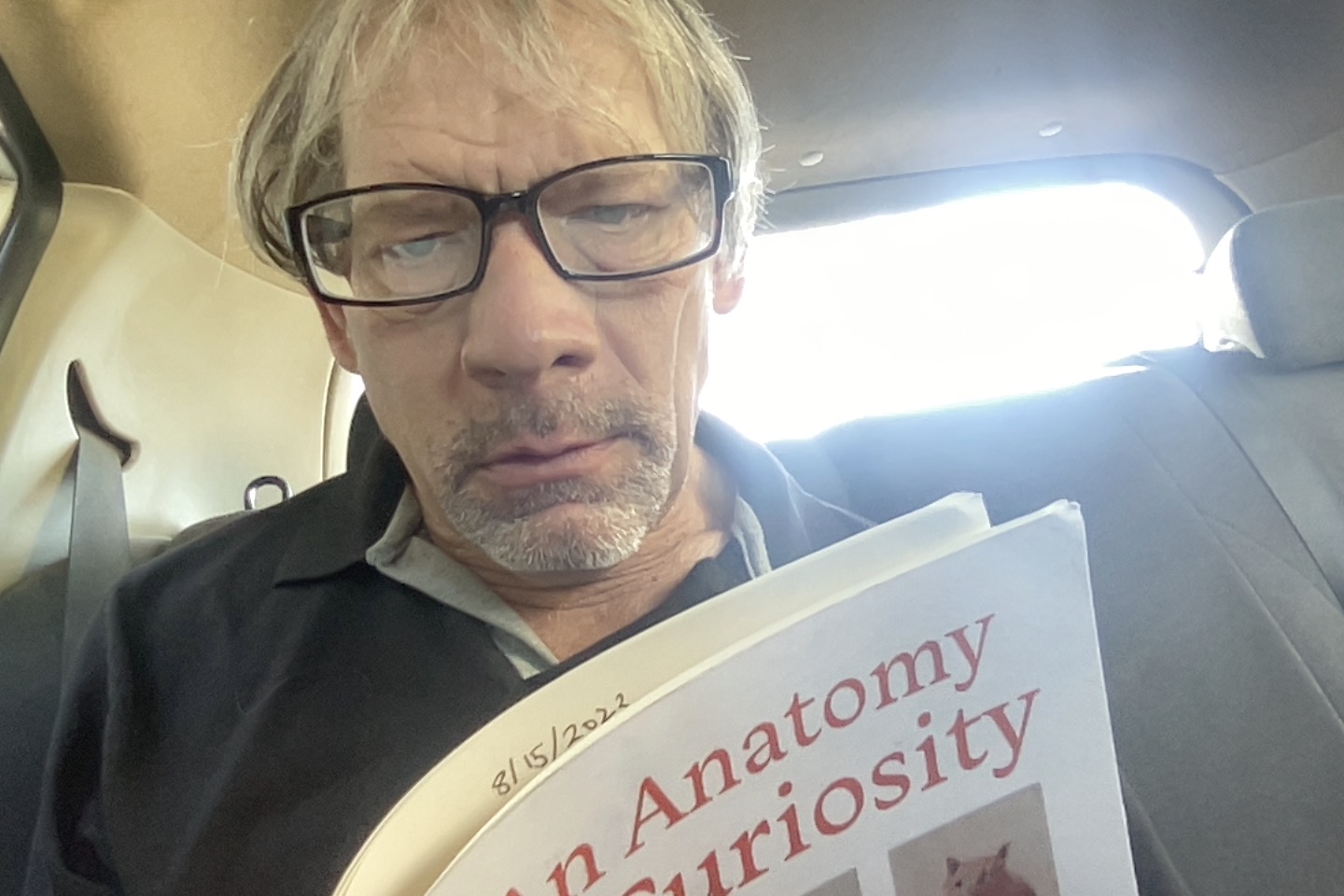 CS Bio, url, foto, and foto credit
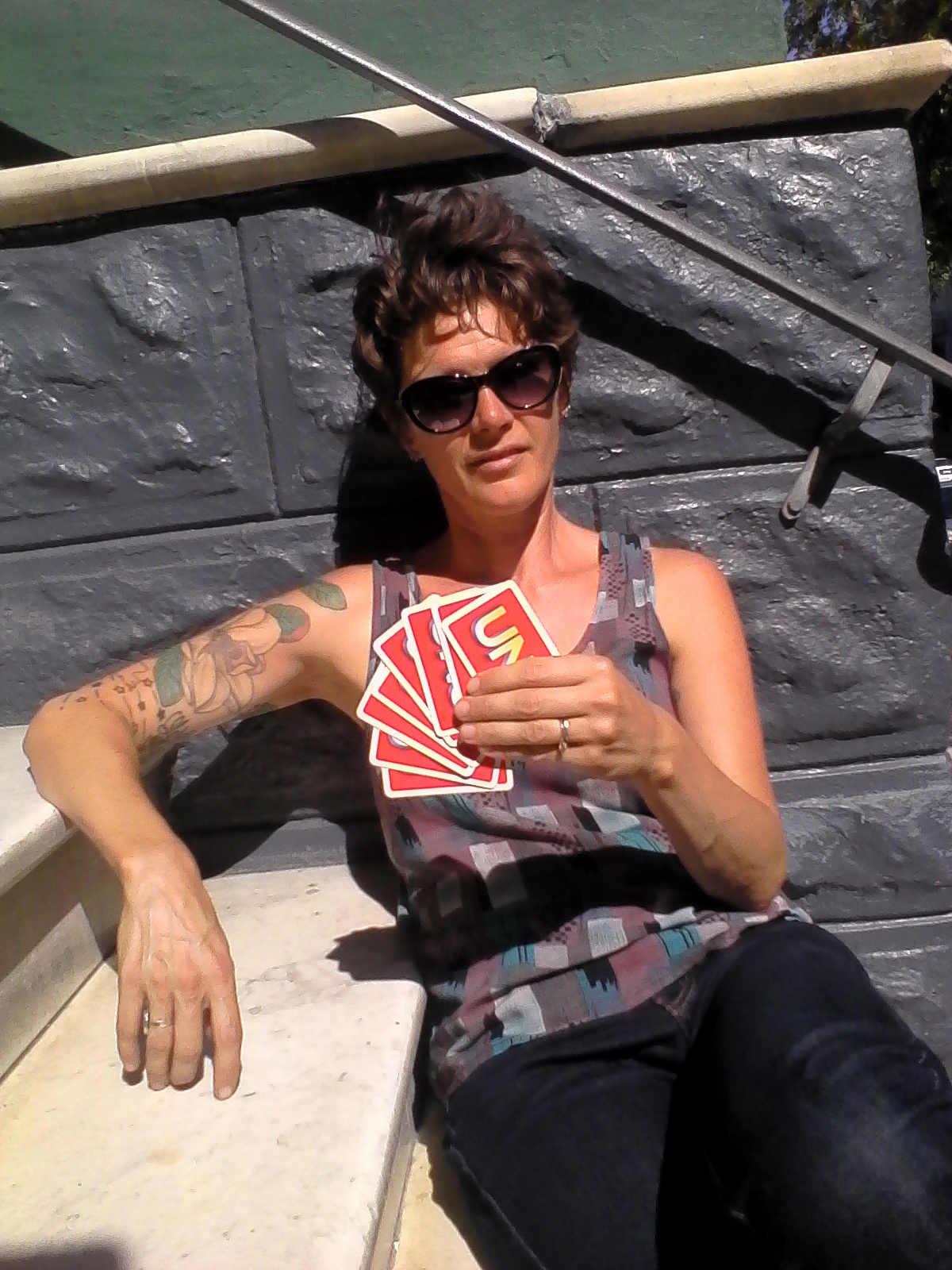
ST bio, url, and foto credit